Catalyst Design
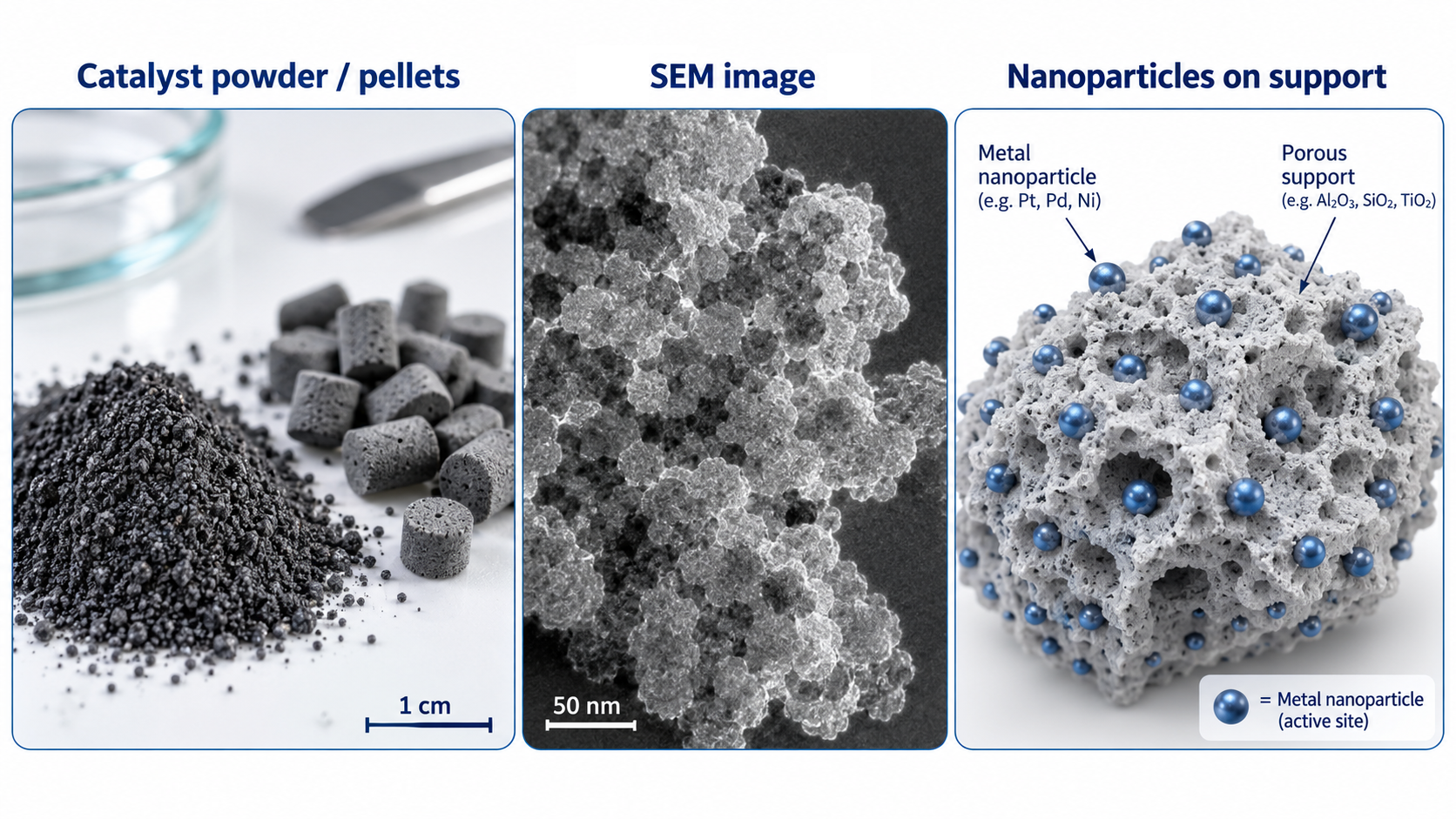
H2transition investigates supported metal catalysts with the aim of achieving high ammonia-conversion activity, prolonged time-on-stream stability and improved performance at reduced temperatures.
The research explores catalyst formulations based on active phases such as Ru and bimetallic systems including Co–Fe, combined with high-surface-area and chemically tailored supports. The role of metal dispersion, particle size, morphology, acidity/basicity, reducibility and metal–support interactions is systematically investigated to establish structure–activity–stability relationships.
Advanced Characterization
From material structure to catalytic performance
A combination of complementary characterization techniques is employed to investigate the textural, structural, morphological, chemical and surface properties of the developed catalysts including: BET, XRD, SEM/TEM, H₂-TPR, FT-IR
The resulting material descriptors are correlated with catalytic activity and stability, enabling a rational understanding of the parameters governing ammonia decomposition.
Ammonia Cracking
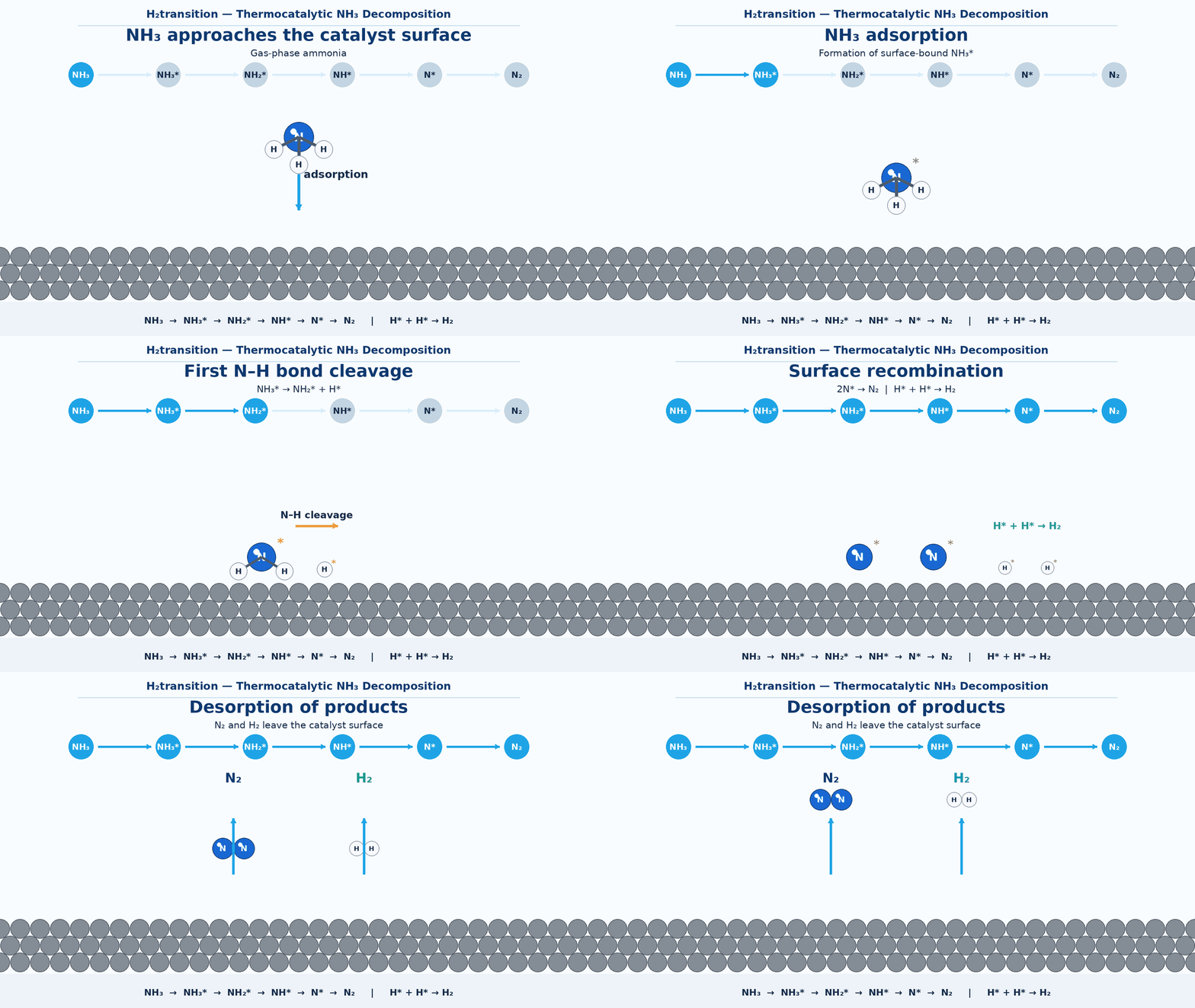
2NH₃ → N₂ + 3H₂
Thermocatalytic ammonia decomposition is an endothermic process. One of the central research challenges is to maintain high conversion and hydrogen production rates while reducing the operating-temperature and energy requirements of the cracking process.
Catalytic Testing & Stability
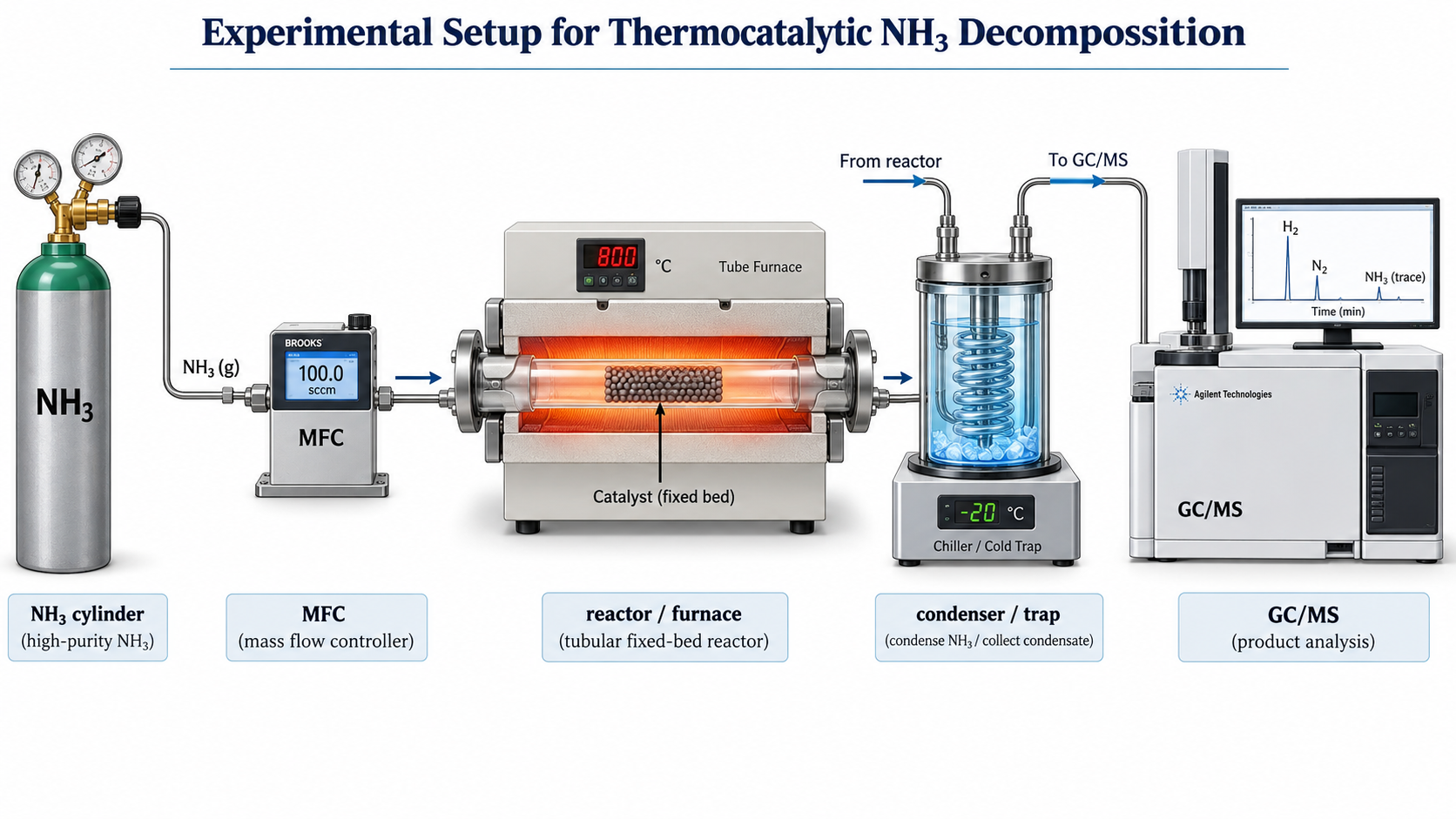
Catalyst performance is evaluated in a bench-scale fixed-bed reactor under controlled ammonia-cracking conditions. Temperature and Gas Hourly Space Velocity (GHSV) are varied systematically to determine catalytic activity and hydrogen production behaviour.
Gas chromatography and mass spectrometry are used for reactant/product analysis, while extended time-on-stream experiments provide information on catalyst durability, deactivation and potential regeneration strategies.
Membrane Reactor
Reaction and separation in a single intensified system
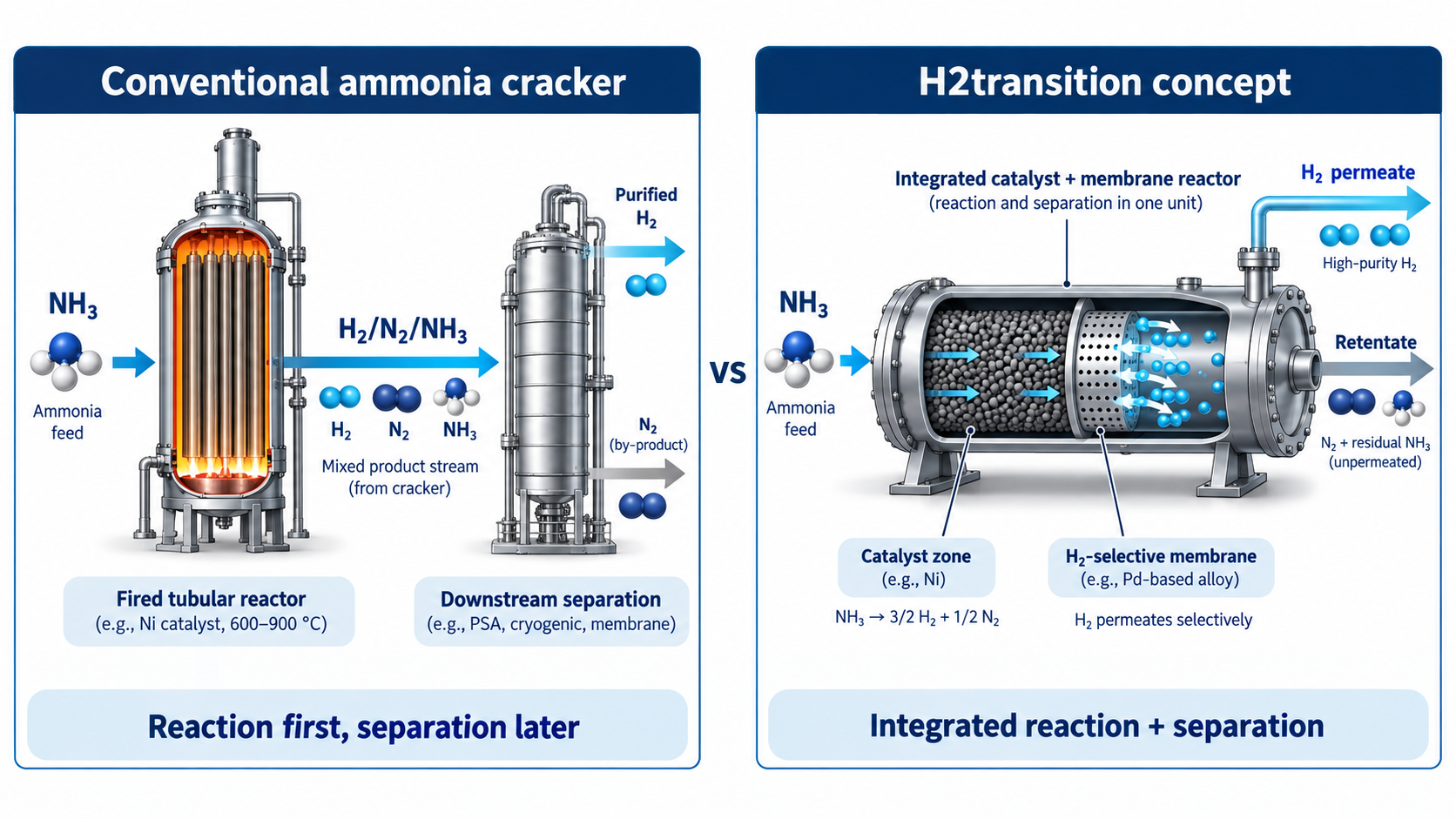
The H2transition membrane-reactor concept aims to combine catalytic ammonia decomposition with selective hydrogen removal.
Following catalyst optimization, the most promising catalytic formulation will be integrated with a commercially available H₂-selective membrane and evaluated under optimized operating conditions. Particular attention will be given to hydrogen purity, production rate and overall process-energy requirements.
By continuously separating hydrogen from the reaction environment, membrane-assisted configurations offer a route towards intensified ammonia cracking and simplified downstream hydrogen purification.